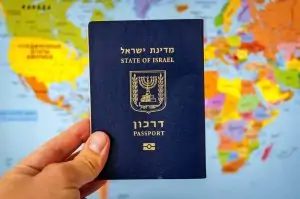
There are many foreign workers who come to Israel to work, including, and mainly, in the caregiving sector. These foreign workers care for our parents, grandparents, and relatives in exhausting work that is hard both emotionally and physically. Ultimately, their large numbers in Israel, and the need to employ them, stem from the simple fact that many Israelis do not want to do this kind of work. In this article, therefore, we discuss the legal aspects of employing foreign workers in the caregiving sector in Israel, as follows:
The Law on Entry into Israel:
The rule is that entry into Israel must take place under a visa granted by the Minister of the Interior, openly, through a border crossing. This is what the Entry into Israel Law, 5712-1952 (the “Entry into Israel Law”) provides. That is, entering Israel requires an entry visa that also gives the right to stay in the country for a period. Accordingly, there are several types of visas, for example: a transit visa, limited to a few days; a visitor visa, limited to three months; a permanent residence visa, limited to three years; and more.
Under the Entry into Israel Law, the Minister of the Interior also has the authority to extend residence visas, under Section 3 of the Law. Section 3(1) gives the Minister of the Interior the authority to extend a residence visa in Israel beyond the period, for up to 10 days; Section 3(2) gives the Minister the authority to extend a visitor visa for a period not exceeding two years; and the Minister also has the authority to extend a temporary residence permit for a period of up to two years as well.
The Entry into Israel Law is in fact intended to regulate how people enter Israel, to give the State of Israel the ability to supervise and monitor people who enter Israel, and, of course, to enable the State to prevent people who may harm its security from entering. In addition, the Entry into Israel Law gives the Minister of the Interior broad powers to implement and enforce it, as the Supreme Court has also described:
“The Entry into Israel Law, 5712-1952, provides that the authority to decide on granting permits for permanent residence is vested in the Minister of the Interior. The Law and the regulations did not set criteria for granting residence permits in Israel, and the established rule is that ‘the authority to grant such a permit, and the discretion to exercise it, are vested in the Minister of the Interior, who has broad discretion on the matter.'”[1]
It should be noted that the Entry into Israel Law also imposes penalties on those who enter Israel unlawfully, under Section 12 of the Law. In addition, as part of the Minister’s powers, the Minister of the Interior has the authority to restrict entry into Israel, to prohibit entry into Israel, to cancel an entry and residence visa, and even to order the deportation of a person from Israel.
The Law on Foreign Workers in Israel:
A specific set of rules applies to the entry of foreign workers into Israel, regulated both in the Entry into Israel Law and in another, separate law called the Foreign Workers Law, 5751-1991 (the “Foreign Workers Law”).
The Foreign Workers Law is an additional, separate arrangement for regulating the entry and employment of foreign workers. The Entry into Israel Law deals with entry in general, while the Foreign Workers Law sets out the conditions for employing a foreign worker in Israel for the purpose of obtaining an entry visa. Accordingly, the purpose of the Foreign Workers Law has two layers.
On the one hand, the State of Israel must protect its economy and create and preserve jobs for its citizens. On the other hand, there are fields in which the help of foreign workers is needed, for example the restaurant industry, construction, agriculture, and, of course, caregiving, which we discuss in more detail below.
The need to steer and regulate the employment of foreign workers, while also protecting their rights, is fully reflected in the Foreign Workers Law. As the Supreme Court rightly described:
“Government policy is to reduce the number of foreign workers in the country. Therefore, as argued, the allocation of permits to employ foreign workers must be carried out according to precise and orderly procedures that, on the one hand, ensure that the principle of equality is upheld and, on the other hand, protect the State’s interest in not allowing the employment of foreign workers beyond the maximum number it wishes to permit.”[2]
The need to protect foreign workers as well, as reflected in the Foreign Workers Law, stems from the wish to protect a group that is weaker from the outset, more exposed to exploitation, and unfamiliar with the country’s language and laws, as aptly stated:
“Foreign workers do not enjoy the effective protection of protective labor legislation; they are exposed to abuse, exploitation, and oppression, and they find it difficult, among other things because they lack the knowledge and money needed to conduct legal proceedings and because of their great dependence on their employers, to bring their cases before the courts.”[3]
This is also what the Foreign Workers Law provides in Section 2(c), as follows:
“A visa and residence permit shall not be granted to a foreign worker as defined in Chapter D1 of the Foreign Workers Law, 5751-1991, unless the person seeking to employ the foreign worker holds a permit under Section 1M of the Foreign Workers Law, and the Minister of the Interior may determine that for foreign workers in certain positions he has set, or for types of workers he has set, the grant of a visa or residence permit does not require such a permit; the Minister of the Interior shall state the foreign worker’s field of occupation in the visa and residence permit granted to him.”
In addition, the Foreign Workers Law provides that in order to employ a foreign worker, a permit must be obtained in advance; that is, the employer must obtain approval to employ a foreign worker, which is granted under Section 3M of the Foreign Workers Law, which provides that the approval will be granted by the Ministry of the Interior. A permit to employ a foreign worker will, as a rule, be granted according to the need in the field in which the foreign worker will work, as aptly stated:
“(a) A person shall not take on a foreign worker for employment unless the commissioner, or an employee of the Ministry of the Interior on his behalf, has permitted in writing the employment of the foreign worker by that employer, and in accordance with the conditions of the permit; such a permit may be for a certain quota of foreign workers to be employed by that employer or according to a list of names. (b) Permits under this section shall be granted taking into account, among other things, the characteristics of the labor market in the various employment sectors and regions.”
At the same time, to obtain a permit, the employer must meet several conditions. Among other things, the employer must present a written contract signed with the foreign worker, arrange health insurance for the foreign worker, provide the foreign worker with suitable housing, and pay appropriate wages. Below, we will expand on the obligations imposed on an employer of a foreign worker, and in particular a foreign worker in the caregiving sector.
Extending the Visa of a Foreign Worker in the Caregiving Sector:
Section 3A of the Entry into Israel Law provides that although the Minister of the Interior has the authority to extend visitor visas for up to two years, in the case of foreign workers, their residence visa may be extended for a total period of up to five years. In addition, the Minister of the Interior may extend the residence visa of foreign workers in the caregiving sector for additional periods of one year at a time, provided that the caregiver has been caring for the same Israeli patient continuously for a year.
It should be noted, however, that this requires a recommendation (opinion) from a representative of the manpower company that acts as an intermediary for caregiving workers (as we explain below), stating that removing the caregiver would harm the patient and his or her emotional and mental state. Alternatively, under the Entry into Israel Law, the Minister of the Interior may extend the foreign caregiver’s residence visa on humanitarian grounds, even if the caregiver has not worked for the same patient for a year and even without a recommendation from a manpower company representative.
However, an extension of the residence visa on humanitarian grounds will be granted only where the permit is for work with a single patient.
Arranging an Employment Permit for a Foreign Worker in the Caregiving Sector
A person who wishes to employ a foreign worker in the caregiving sector (whether for an elderly person in need of care, or even for a person with a mental or physical disability who is a victim of hostile action or an IDF disabled veteran) must begin the permit process by applying to a manpower agency in the field.
There are special manpower agencies that act as intermediaries between foreign caregivers and Israeli clients who need this service. These agencies operate under a license from the Ministry of the Interior. There are several such manpower agencies, and their details appear on the Ministry of the Interior website.
Accordingly, with respect to employing foreign workers in the caregiving sector, Section 1L(d) of the Foreign Workers Law provides that a person who needs or is entitled to nursing care may apply for a permit to employ a foreign worker in the caregiving sector. After making contact with a foreign caregiver through a manpower agency, a permit must be obtained from the Ministry of the Interior, in accordance with the provisions of the Foreign Workers Law. So the first stage is finding a foreign worker, and the second stage is obtaining a permit to employ him or her.
Obtaining a permit to employ a foreign worker is also regulated by a procedure issued by the Ministry of the Interior on handling applications for a new permit, or the extension of a permit, to employ a foreign worker in the caregiving sector (the “Procedure”).
It should be emphasized that the Procedure provides that a permit to employ a foreign caregiver will not be granted to a person who is in an institution where he or she receives care, for example a rehabilitation institution or a hospital. In addition, the Procedure provides that a permit to employ a caregiver will be granted only to a person who actually needs nursing supervision for most hours of the day. A permit will therefore not be granted to a person who wishes to employ a foreign caregiver for only a few hours a day or part-time.
Furthermore, as part of the application for a permit to employ a foreign worker, the applicant must sign an undertaking (which binds every employer seeking to employ a foreign worker), which is submitted together with the application for an employment permit, and a fee must also be paid. If the Ministry of the Interior permits the employment of the foreign worker, the foreign worker will be granted a work visa called B/1, which gives him or her the right to work in Israel tied to a fixed employer.
It is therefore also important to note that a foreign worker employed in Israel may be employed only by his or her employer, whether in the caregiving sector or in other fields, since a foreign worker enters Israel with a permit after the employment permit has been granted, and that permit is limited to a type of work and to an employer. On the other hand, a foreign worker who stops working for a particular employer is not “bound” to that employer, but may find work with another employer.
In the spirit of the Foreign Workers Law, the Procedure imposes a host of obligations on an employer of a foreign worker in the caregiving sector, and failure to fulfill them may lead to rejection of the application to employ the foreign worker or to cancellation of the permit.
For example, to obtain a permit to employ a caregiver, the applicant must act in accordance with Israeli labor laws, provide the caregiver with suitable housing and appropriate wages, arrange a bank account for the worker, and keep all the documents showing the transfer of wages to the foreign worker. In addition, a foreign worker (including a foreign caregiver) is entitled to a day of rest, holidays, recuperation pay, and severance pay when relevant.
Examples from Case Law:
The employment of caregivers has often brought before the Israeli courts, including the Supreme Court, disputes that raised several fundamental legal and moral questions. Below we review several judgments given in this field, including in the field of employing foreign workers in Israel.
There is no doubt that one of the most fundamental and important disputes that came before the Supreme Court concerning foreign workers was the case heard in a petition filed by the association Kav LaOved. In the petition, the association argued that the discrimination practiced against foreign workers, in excluding them from a large part of the rights granted under National Insurance and state health insurance, amounts to serious discrimination. The association therefore asked the Minister of the Interior to issue regulations that would apply those rights to foreign workers. The petition was accepted, and the Supreme Court held:
“Indeed, as a matter of principle, there may be a difference between the medical coverage given to migrant workers and the medical coverage given to citizens and permanent residents. However, this difference cannot justify arrangements that infringe the core of the right to dignity. […] More specifically, I believe that in the present context we should address both the infringement of the right to health as derived from the right to human dignity and an independent infringement of the right to human dignity. The infringement of the right to health: the right to health, at least at its core, is bound up with the right to dignity, and it is also derived from the right to life and the protection of a person’s body.”[4]
The most important case in the field of foreign workers is the Yolanda Gloten case, in which the Supreme Court held that the Hours of Work and Rest Law cannot be applied to caregivers, who in effect work 24 hours a day. In the petition, the Labor Court was asked to order payment for overtime that had not been paid to the petitioner.
The counter-argument focused on the fact that the Hours of Work and Rest Law, 5711-1951, excludes “positions of trust” from its scope; that is, a person in a position of trust may receive a global salary rather than an hourly wage that includes payment for overtime. The court, by a majority, held that the Law does not apply to caregivers, despite the difficulty:
“Indeed, this is a complex issue, and there is no doubt that it should have been resolved by the legislature. The legislature has the tools to examine and balance all the relevant considerations and, above all, the ability and power to create a new arrangement, not currently found in the law, for workers in unique situations who are unlike the ordinary forms of employment to which the provisions of the Hours of Work and Rest Law are directed. […] A balanced solution must be found that will fulfill the purpose of the law, but will also lead to a just result that prevents disproportionate harm to each of the relevant groups.”[5]
Summary:
Employing a foreign worker in the caregiving sector requires meeting several conditions, as described in this article. In addition, employing a foreign worker is subject to the provisions of the Entry into Israel Law and the Foreign Workers Law. A foreign worker is entitled to wages in accordance with the law and to many other rights that the employer must respect and safeguard. Employing a foreign worker in the caregiving sector therefore requires legal knowledge, guidance, and direction, so it is always advisable to seek the help of a lawyer who specializes in immigration and status in Israel.
[1]AAA 9018/04 Munir v. Ministry of the Interior (published in Nevo), para. 6.
[2]HCJ 3445/05 Sushimai 2004 Restaurant Ltd. v. Ministry of Industry, Trade and Labor – Auxiliary Unit (published in Nevo).
[3] A. Yadlin, “Foreign Labor in Israel” [Hebrew], in Menachem Goldberg Book (A. Barak, S. Adler, R. Ben-Israel, Y. Eliasof, N. Feinberg, eds., 5762-2001), 350; quoted in Ayelet Gaz, Adv., “Foreign Workers” Law: Theory and Practice [Hebrew], Chapter A: Employment of Foreign Workers in the State of Israel – General (March 2014) (Otzar HaMishpat).
[4]HCJ 1105/06 Kav LaOved v. Minister of Welfare (published in Nevo), para. 2 of the opinion of Justice D. Barak-Erez.
[5]HCJFH 10007/09 Yolanda Gloten v. National Labor Court (published in Nevo), para. 13 of the opinion of Justice Edna Arbel.