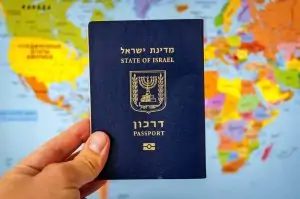
If you have ever wondered how many types of residence visas exist in Israel, you will find that there are quite a few. Not only that, but the laws and conditions behind each of these visas create many difficulties for those seeking to stay in Israel, for various reasons.
Below we set out all the types of visas for entering Israel and explain how important it is to have the services of an expert visa lawyer.
What Is a Visa?
A visa is the formal approval or permit that allows entry into and residence in Israel. There are several entry visas, and the types of visas differ according to the purpose of entering the country.
Under Israeli law, a foreign national seeking to enter Israel must apply for a visa in accordance with the law in order to stay in Israel lawfully.
There are many types of visas, from a tourist visa to a visa that allows permanent residence in Israel. Visas are issued by the Population and Immigration Authority, under authority granted to it by the Ministry of the Interior. Visas are issued for varying periods, depending on the purpose of the stay in Israel. It should be noted that, under certain conditions and after completing a process with the Ministry of the Interior, a foreign national may even obtain Israeli citizenship, which exempts him or her from applying for any kind of visa for a temporary or partial stay in the country.
Types of Entry Visas to Israel:
Visitor/tourist visa: a B/2 visa.
When this visa is granted: It is granted to anyone who wishes to come to Israel for a short period of up to 3 months to visit. The visitor may come for tourism, to visit friends or family, or to study Hebrew at an ulpan.
The conditions for the visa: Holders of this visa may not work in Israel. In addition, the permit to stay in the country is for up to three months. Visitors from certain countries can receive the visa on arrival in Israel, while visitors from other countries must apply for the visa at an Israeli embassy or consulate in their country of origin.
A tourist/foreign national visa with a work permit: a B/1 visa
When this visa is granted: A tourist visa that also includes a work permit. Foreign workers in Israel receive this type of visa. It is granted only with the approval of the Ministry of the Interior.
The conditions for the visa: A foreign national who wishes to work in Israel must submit an appropriate application before arriving in Israel, since he or she cannot enter the country on a B/2 tourist visa and only then convert it into a B/1 tourist visa, which also allows work in Israel. The visa is valid for up to one year, and workers in certain fields, for example caregiving, can sometimes, under certain conditions, remain in Israel for more than five years. It is highly advisable to go through this process with a work visa lawyer.
A volunteer visa: a B/4 visa
When this visa is granted: To people who come to Israel and wish to volunteer without receiving pay.
The conditions for the visa: A declaration of volunteering in Israel.
A visa for temporary residence in Israel, the aliyah visa: an A/1 visa
When this visa is granted: It is granted to a new immigrant who is still undecided about staying in Israel permanently.
What this visa provides: The holder may work, receive full National Insurance rights like any other Israeli citizen, and extend the visa for up to five years.
A student visa: an A/2 visa
When this visa is granted: A student visa granted to students who are citizens of foreign countries and have been accepted to study at a recognized academic institution in Israel. The visa is also valid for studies at Jewish Agency youth institutions and yeshivas. The visa is valid for one year, with multiple entries and the option of extension, depending on the length of the studies.
The conditions for this visa: In most cases, the application must be submitted in advance in the country of origin. This visa does not include a work permit in Israel, only studies. There may be special cases in which work in Israel will be allowed. A minor cannot receive the visa without the written consent of both parents or a legal guardian.
The applicant must present confirmation of acceptance to an educational institution in Israel and evidence that the pupil or student can fund his or her studies and living expenses throughout the stay in Israel. In addition, the passport must be valid for the entire period of studies plus another six months.
A clergy visa: an A/3 visa
When this visa is granted: A visa granted to clergy who come to Israel to fill a religious position.
The conditions for this visa: The visa is conditional on an invitation from a recognized religious institution in Israel. The grant of this type of visa is within the sole authority of the Ministry of the Interior and requires its prior approval. The validity of the visa is set by the Ministry of the Interior. It can be extended only in Israel.
A visa for family members of students and clergy: an A/4 visa
When this visa is granted: It is used for the family members of students holding an A/2 visa and of clergy holding an A/3 visa who come to Israel.
The conditions for this visa: The applicants are the spouse or minor children of the holder of the A/2 or A/3 visa, that is, the student or clergy member who came to Israel and holds the relevant visa.
A residence visa in Israel: an A/5 visa
When this visa is granted: A general permit used for temporary residence in Israel.
The conditions for this visa: The visa is granted to foreign nationals who are in the process of obtaining permanent residency or citizenship in Israel through marriage to a citizen or resident of Israel, or on humanitarian grounds, for example refugees who fled their country, and so on. Holders of an A/5 visa receive a temporary identity card valid for one year. This identity card can be renewed and extended. Holders of an A/5 visa may work in Israel. They also receive all the rights of the National Insurance Institute.
Because of the complexity of the field, it is advisable to go through the process of obtaining an A/5 visa with the assistance of an expert lawyer for Ministry of the Interior matters and visas.
A visa for participation in national projects
Participants in projects such as Taglit-Birthright, Masa, and others organized by the Jewish Agency are entitled to a special visa tailored to the nature of the project and its planned duration. If the project lasts up to three months, participants will receive a B/2 visitor visa. For longer projects, they will be issued an A/2 study visa, valid for up to one year and allowing multiple entries into Israel.
A visa or permit for permanent residence
It is granted to permanent residents who no longer need a special permit or its renewal. A permanent resident has almost all the rights and obligations of an Israeli citizen; one of the main exceptions is the right to vote in Knesset elections. In addition, if the person has lived and settled in another country, for example for more than seven years, or has received citizen or resident status in that other country, his or her residency in Israel may be revoked.
Partners of permanent residents of Israel who are not married to them are entitled to receive status on humanitarian grounds in certain other circumstances.
Obtaining permanent residence is also harder because of the strength of the rights it carries, and it is highly advisable to go through the process with a lawyer.
A re-entry visa
Anyone staying in Israel with a temporary residence visa of the kinds described here who wishes to go abroad and then return to Israel must obtain a re-entry visa (an “inter-visa”) from the Ministry of the Interior in advance. Otherwise, the visa he or she holds will expire upon leaving the country.
The Importance of Representation by an Expert Visa Lawyer:
The multitude of visas, requirements, and procedures may confuse anyone who is not familiar with the conditions, requirements, and processes needed to obtain the right visa for the applicant’s specific need. The guidance of a visa lawyer is important, even critical.
Sometimes a single missing document or forms that were not filled out properly may cause the Ministry of the Interior to reject the visa application and significantly lengthen waiting times. With a skilled and experienced lawyer in the field, the process can be shortened considerably, especially given such a lawyer’s familiarity with officials at the Ministry of the Interior and the immigration authorities and with the requirements and the amendments made from time to time to the various procedures and requirements.
Professional guidance therefore saves time, money, and above all distress and much running around between the various bureaucratic bodies, especially in complex cases.
Our firm’s reputation has been built on proven successes and dedicated professional guidance in obtaining entry visas to Israel of all kinds, including in complex and complicated cases, for example changing the type of visa, extending it, or dealing with a refusal of an application to enter Israel.
Decades of familiarity with the systems of the Immigration Authority and the Ministry of the Interior, and a thorough knowledge of the law, including its amendments and changes, have brought the firm unprecedented successes and the representation of dozens of people seeking to enter Israel lawfully.