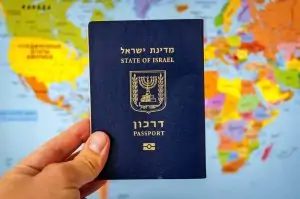
What Is the A/1 Visa for Those Entitled Under the Law of Return, and Who Is It For?
The A/1 visa is a temporary resident visa in Israel intended for a person who is recognized as entitled to immigrate to Israel under the Law of Return, but who first wishes to stay in the country for a temporary period and explore the possibility of settling here.
Put simply: this visa is suitable for someone who can in principle immigrate to Israel but still wants time to make an informed decision before receiving oleh status and Israeli citizenship.
The Population Authority defines the purpose of the procedure as handling persons who are entitled to an oleh visa under the Law of Return and wish to examine the possibility of, and the conditions for, settling in Israel as olim.
The A/1 visa is therefore particularly relevant for people who want to work, study, get to know life in Israel, explore housing and employment options, and understand whether permanent aliyah is right for them and their families.
In practice, the A/1 visa may be suitable for Jews, children of Jews, grandchildren of Jews, and their spouses, subject to meeting the conditions of the Law of Return and to review by the Population Authority.
The visa grants temporary status, so it serves as an interim stage: the applicant stays in Israel on a regularized basis but has not yet completed the transition to oleh status.
The main advantage of the visa is flexibility. It allows a person entitled under the Law of Return to live in Israel for a significant period, see the reality of the country up close, and later decide whether to apply for a change of status to oleh.
For many families, this is a better solution than deciding on aliyah immediately, especially where there are considerations of work, children, studies, property in the country of origin, or other family members.
Eligibility Conditions for the A/1 Visa and the Connection to the Law of Return
The basis for receiving an A/1 visa is entitlement under the Law of Return. The Law of Return grants the right of aliyah to a Jew, as well as to the spouse of a Jew, the child of a Jew, the grandchild of a Jew, and their spouses, subject to the exceptions set out in the Law.
The Ministry of Aliyah and Integration notes that the Law of Return applies to this circle of eligible persons, except for the exceptions and qualifications set out in the Law.
Therefore, a person applying for an A/1 visa must first prove his or her connection to Judaism or to a person entitled under the Law of Return. The review will include, among other things, birth certificates, marriage certificates, name change certificates, documents showing Jewishness, community records, archival documents, official certificates from the country of origin, and sometimes also documents already examined as part of a previous application for aliyah or for an oleh visa.
Beyond proving entitlement, the Population Authority also examines the applicant’s identity, personal status, the validity of the passport, and the validity of the documents, and sometimes also questions of a criminal, security, or public bar.
The clearer, better authenticated, and properly translated the documents are, the easier it is for the Authority to examine the application.
It is important to understand that the connection to the Law of Return is the heart of the process. The A/1 visa is intended for someone who has a genuine basis of entitlement to immigrate to Israel and wishes to use a temporary track before making a final decision.
A person who comes to Israel for ordinary work, only for studies, for a family visit, or for tourism will usually need a different visa track, depending on the purpose of the stay.
How to Apply for an A/1 Visa with the Ministry of the Interior
An application for an A/1 visa is submitted to the Population and Immigration Authority at the Ministry of the Interior, and in some cases the process can be started outside Israel, at an Israeli mission in the country of origin.
Where the applicant is already in Israel, the application is usually handled by the relevant Population Authority office, depending on his or her status, place of residence, and the type of application.
At the first stage, a complete file of documents is prepared. According to the Population Authority’s service publications, the documents required in applications of this kind include a foreign passport, copies of the passport pages, recent passport photos, original certificates and confirmations proving Jewishness or entitlement under the Law of Return, a birth certificate, and a recent public document from the country of origin showing personal status.
In many cases, notarized translations and authentication, such as an apostille or consular authentication, will also be required where the documents were issued abroad. In family cases, it is especially important to present a clear chain of documents: who the Jew in the family was, how the applicant is connected to him or her, and what the source of entitlement under the Law of Return is.
A properly structured application file usually includes:
- A valid passport and copies of the passport pages
- Recent passport photos
- The applicant’s birth certificate
- A marriage or divorce certificate or a document showing personal status, as needed
- Documents proving Jewishness or entitlement under the Law of Return
- Name change certificates, if there were name changes in the family
- Documents of accompanying family members, where the application is a family one
- An application form and fee, as required by the Authority
After the application is submitted, the Population Authority checks the documents and the applicant’s entitlement. The Population Authority may ask for additional material, clarifications, further documents, or an appearance at the office. When the application is approved, the applicant receives A/1 status for a defined period, and can later apply for an extension or consider a change of status to oleh.
It is advisable to avoid submitting an incomplete or disorganized file. In Law of Return cases, a small discrepancy in a surname, a date of birth that differs between documents, an unauthenticated certificate, or a document on Jewishness that is not clear enough may cause a long delay.
Good preparation of the file saves time, reduces requests for additional material, and strengthens the application from the very first stage.
What Happens After Receiving an A/1 Visa: Validity, Extension, and Further Status Regularization
After receiving an A/1 visa, the applicant receives the status of a temporary resident of Israel for a limited period. The visa is intended for a person entitled under the Law of Return who wishes to explore the possibility of settling in Israel before receiving oleh status, so it serves as an important interim stage between a temporary visit to Israel and permanent aliyah.
The Population Authority notes that the track is intended for persons entitled under the Law of Return who wish to examine the possibility of, and the conditions for, settling in Israel as olim.
During the period of the visa, it is important to keep track of the validity of the permit, the validity of the passport, and the conditions set in the visa. Toward the end of its validity, an application for extension can be submitted to the Population Authority with up-to-date documents.
As a rule, the Authority will re-examine entitlement under the Law of Return, the validity of the documents, the continued lawful stay in Israel, the passport details, the circumstances of the stay in the country, and sometimes also questions of center of life, work, studies, or family ties in Israel.
A person holding an A/1 visa who plans to leave Israel during the period of the visa should check in advance whether a re-entry visa (“inter-visa”) is needed. Leaving Israel without properly arranging the return may cause difficulty in re-entering, especially while the applicant is still in a temporary process with the Ministry of the Interior.
It is therefore advisable to make sure before the flight that the validity of the visa, the passport, and the re-entry permit also cover the planned date of entry into Israel.
Later on, the holder of an A/1 visa may consider moving to oleh status. This is a separate stage in which an application for a change of status is submitted, and the Population Authority examines entitlement under the Law of Return and the supporting documents.
There are dedicated procedures for handling applications by persons entitled under the Law of Return who wish to change their status in Israel, so it is advisable to prepare in advance with a complete file of documents and not to wait until the visa expires.
In addition, it is worth knowing that the A/1 visa may also be relevant to rights with other bodies, but each body examines eligibility according to its own rules. For example, the National Insurance Institute notes that the residency of A/1 visa holders is examined after a minimum period of residence in Israel and subject to documents showing a center of life.
In summary, the A/1 visa for those entitled under the Law of Return allows a person entitled to immigrate to Israel to explore life in the country before deciding on permanent aliyah.
The process requires proof of entitlement under the Law of Return, the submission of accurate documents, and orderly dealings with the Population Authority. After receiving the visa, it is important to keep track of its validity, handle extensions on time, check whether a re-entry visa is needed before leaving Israel, and later consider moving to oleh status in light of the circumstances and plans for settling in Israel.