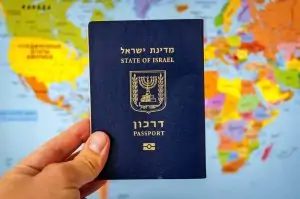
What Changes Take Effect from January 2025?
Following the Israeli government’s decision to tighten control over the entry of foreigners into the country, from January 2025 tourists from visa-exempt countries will be required to submit an advance application for ETA approval (Electronic Travel Authorization) before arriving in Israel.
The change is intended to make entry control more efficient, strengthen national security, and bring Israel into line with the many countries that have already adopted a similar mechanism, such as the United States (ESTA), Canada (eTA), and Australia.
What Is an ETA and How Does It Affect Travelers?
An ETA is an electronic travel authorization that is a precondition for entry into Israel, but it is not a residence visa or a substitute for a visa to Israel. In other words, citizens of countries entitled to enter Israel without a visa will still be able to enter, but only after receiving ETA approval in advance.
The change affects millions of tourists and business travelers who until now entered Israel without any advance procedure. Now they will have to submit an online application, wait for approval, and make sure it has been approved before they arrive.
How Will the Process Work?
The process will be entirely digital and carried out through a dedicated platform to be launched by the Population and Immigration Authority. The main steps are:
Submitting an online application: filling in a form with personal details, passport details, the purpose of the visit, and more.
Paying a fee: the amount of the fee has not yet been published, but it is expected to be similar to comparable systems around the world (around $7-15).
Background check: the system will check the applicant’s details against security data, criminal records, or previous violations of residence conditions in Israel.
Receiving an answer: most applications will be approved within 24 to 72 hours, but some applications may take longer if an in-depth check is needed.
Using the approval: the approval will be valid for two years (or until the passport expires, whichever is earlier) and will allow multiple entries into Israel.
How Does the Change Affect Travelers?
The change is expected to affect travelers in both positive and negative ways. On the one hand, the entry process into Israel will become faster, since the security and administrative checks will be carried out in advance, which will reduce delays at Ben Gurion Airport and make border control more efficient.
In addition, the new system will allow undesirable travelers to be screened out early, which will raise the general level of security.
At the same time, the obligation to obtain ETA approval in advance also creates certain disadvantages. Travelers who do not arrange the approval in time will not be allowed to board a flight to Israel at all, which may disrupt travel plans.
There may also be cases in which applications are refused for various reasons, which will require filing an appeal or looking for alternative solutions. Beyond that, this adds another bureaucratic step that requires visitors to plan and prepare earlier than before.
The Legal Implications of ETA Approval: What Are the Criteria for Obtaining It?
Applying the ETA requirement from January 2025 substantially changes the mechanism for controlling tourists’ entry into Israel. Alongside the bureaucratic aspect, this change has significant legal implications, since it sets clear criteria for granting or refusing entry approval and creates a new control mechanism through which visitors can be screened before they arrive in Israel.
What Are the Conditions for Obtaining ETA Approval?
An ETA application will be examined on the basis of criteria set by the Population and Immigration Authority. The exact criteria have not yet been published in full, but based on similar policies in other countries, it can be expected that applications will be approved automatically as long as the applicant meets the following requirements:
A valid passport: the applicant must hold a passport valid for at least six months from the planned date of entry into Israel.
No serious criminal record: the authorities may refuse the application in the case of a significant criminal record, particularly serious criminal offenses or security offenses.
No previous violation of residence conditions: anyone who visited Israel in the past and violated the conditions of stay (such as overstaying or working unlawfully) may have difficulty obtaining a new ETA.
Confirming the purpose of the visit: the applicant must declare the purpose of the visit (tourism, business, visiting relatives, etc.) and provide reliable information that does not raise suspicion of an attempt to enter for work or to stay unlawfully.
No security impediment: the Israeli authorities may refuse to approve an ETA for travelers with ties to hostile parties or those suspected of activity that may harm national security.
What Factors May Lead to a Refusal?
The Immigration Authority’s decision to approve or reject an ETA application is based on information gathered from a number of sources, including international databases, cooperation with other authorities, and data held in Israel’s security and immigration systems. Common reasons that may lead to a refusal include:
Mismatched details in the form: typing errors in the passport number, name, date of birth, or personal details may cause an automatic rejection.
A history of immigration violations: visitors who entered Israel in the past and violated the conditions of their stay (for example, those who remained in Israel after their tourist visa expired) may face a refusal of a new application.
Lack of clarity about the purpose of the visit: inconsistent statements or vague information about the purpose of the visit may raise suspicion and lead to a rejection.
Security restrictions: where the applicant has ties to hostile countries, is suspected of criminal activity, or there is any relevant security information, the application may be rejected.
Being on blacklists: people who were previously included on lists of deportees or persons refused entry into Israel may not receive ETA approval.
How Can You Prepare in Advance to Increase the Chances of Approval?
To avoid delays or refusals, it is advisable to take several steps before submitting the application:
Checking passport details: make sure all the details entered match the passport exactly.
Preparing supporting documents: in the case of a long visit, a business visit, or any reason other than ordinary tourism, it may be necessary to present additional documents such as hotel bookings, confirmation from an employer, or an invitation from a person in Israel.
Making sure your visit history is in order: if there were immigration problems in the past, it is worth checking in advance whether the matter can be resolved with the immigration authorities before submitting the application.
Giving clear and accurate statements: avoid unclear statements or information that could be interpreted as suspicious.
This change sets a new standard for entry control into Israel, requiring all visitors to prepare accordingly.
What Can You Do If ETA Approval Is Refused?
Applying the ETA requirement in Israel changes the rules of the game for tourists from visa-exempt countries. While most applications will be approved automatically, quite a few may be rejected for security, administrative, or technical reasons.
For anyone who has received a refusal of entry, this is a significant problem, because not receiving the approval means being unable to enter Israel. It is therefore important to understand the possible reasons for a refusal, how they can be challenged, and what steps are worth taking to reverse the decision.
Why Might an ETA Application Be Rejected?
The Population and Immigration Authority is not obliged to give reasons for all its decisions to reject an ETA application, but the main reasons for refusal include:
Technical problems: an error in entering personal data, a wrong passport number, or a mismatch between the information in the application and the information recorded in official documents or databases.
A history of immigration violations: staying in Israel unlawfully in the past, entering without a permit, working without a suitable visa, or a previous deportation from the country.
Suspected misuse of a tourist visa: if in the past the applicant entered Israel as a tourist but in practice stayed longer than expected, or was suspected of working unlawfully.
Security reasons: intelligence or security information may lead to a particular applicant being blocked from entering, without any further explanation.
Criminal record: anyone convicted of serious criminal offenses, particularly offenses of violence, drugs, fraud, or terrorism, may face a refusal.
How Can You Appeal the Refusal Decision?
Anyone who has received notice that ETA approval was refused may take several steps to try to reverse the decision.
First, check the reason for the refusal carefully. In some cases, the refusal notice may include a general reason or a referral to the relevant body.
It is important to make sure that all the details entered in the application are correct, and to correct any errors found. If the refusal is due to a technical reason, such as a typing error or a missing document, a new application can be submitted with the corrected details.
In many cases, a new application with updated information can lead to approval, especially where the error was in the personal details or documents.
If the applicant’s situation has changed, for example by obtaining additional confirmation from an employer or a family member in Israel, it is advisable to attach supporting documents. However, you should wait at least a few days before submitting a new application, to make sure the system has been updated and is not automatically blocking repeated attempts.
If the application was rejected without a clear reason or on the basis of incorrect information, a formal appeal can be submitted to the Population and Immigration Authority. Supporting documents showing that there is no legal impediment to the applicant’s entry into Israel should be attached.
The appeal will be examined by the competent officials, but there is no commitment to a quick response, so it should be submitted a reasonable time before the planned flight date.
In the case of a refusal on security grounds or a complex immigration issue, it may be necessary to contact a lawyer specializing in immigration law. Lawyers can submit a request for reconsideration, apply to the Appeals Tribunal, or, in exceptional cases, even to the High Court of Justice.
If the refusal is based on incorrect information or an immigration history that is no longer relevant, it is possible in some cases to have the decision changed through appropriate legal proceedings.
What If the Rejection Was Given Without Reasons?
In some cases the Immigration Authority does not provide detailed reasons for a refusal, mainly where security considerations or classified information are involved. In these cases:
An independent check: check whether there are known problems in the applicant’s immigration or criminal background.
Using the appeal channel: submit a formal appeal with all possible documents supporting the right of entry.
Using legal advice: as long as the information provided by the applicant is accurate and complete, the refusal may be due to incorrect information in the system, which can be corrected through appropriate legal proceedings.
How to avoid a refusal in advance?
Since the ETA has become a mandatory condition for entry into Israel, it is essential to submit the application carefully:
Fill in the application accurately: avoid spelling mistakes, errors in passport numbers, or confusing details.
Do not conceal problematic information: anyone who has had a legal dispute with the Immigration Authority in the past or violated the conditions of stay in Israel is advised to consult an expert before submitting the application.
Submit supporting documents where necessary: if the application may raise questions, it is worth adding supporting documents at the first stage (letters of invitation, employment documents, temporary residence confirmations).
Summary
Introducing the ETA mechanism substantially changes the process of entering Israel for citizens of visa-exempt countries. From January 2025, every visitor will be required to submit an online application and receive approval in advance before the flight.
While the procedure is expected to be simple for most travelers, it poses legal and administrative challenges for those who face a refusal.
It is important to prepare in advance, to make sure the application is filled in correctly, to submit supporting documents where necessary, and to make sure there are no problems in the immigration history that could lead to a rejection. In the case of a refusal, appeal routes exist, but you need to prepare for this well in advance.
Travelers with concerns or a problematic background are advised to consult an immigration lawyer before submitting the application, to prevent unnecessary problems and improve the chances of being approved for entry into Israel.